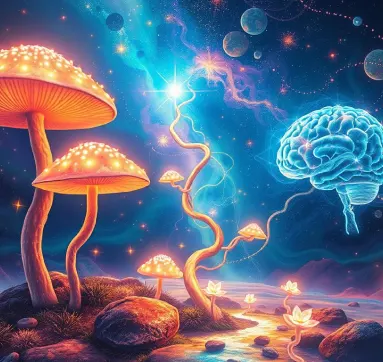










The conversation around magic mushrooms has changed dramatically over the last few years. What was once viewed as a niche topic has now become one of the most searched wellness and neuroscience discussions online. Millions of people across Canada, the United States, and Europe are searching for answers about psilocybin, microdosing, mental clarity, emotional healing, creativity, and cognitive performance. At the same time, major universities and medical institutions are investing heavily into psychedelic research, trying to understand why so many individuals describe psilocybin experiences as deeply meaningful and life-changing.
The interest is no longer driven only by curiosity. It is being driven by research, personal transformation stories, and a growing number of people searching for alternatives to traditional approaches surrounding mental wellbeing, stress management, emotional processing, and self-awareness.
Researchers at Johns Hopkins Medicine, Imperial College London, NYU, CAMH, and other leading institutions have published studies examining the effects of psilocybin on depression, anxiety, neuroplasticity, addiction recovery, and emotional wellbeing. Many of these studies reported measurable improvements in participants following supervised psilocybin-assisted therapy sessions, particularly among individuals dealing with treatment-resistant depression and emotional distress. According to researchers, psilocybin appears to influence serotonin receptors while also affecting communication between brain regions associated with mood, self-reflection, and cognitive flexibility. (hopkinsmedicine.org)
One of the biggest reasons psilocybin research has captured worldwide attention is because many participants report benefits extending far beyond the experience itself. People commonly describe feeling mentally lighter, emotionally clearer, more motivated, and less trapped in repetitive thought patterns. Others report improvements in creativity, relationships, emotional openness, and productivity. While every experience is unique, recurring themes continue appearing across both scientific studies and online discussions.

Why Is Psilocybin Receiving So Much Attention in Neuroscience?
Scientists are especially interested in how psilocybin may affect neuroplasticity. Neuroplasticity refers to the brain’s ability to reorganize itself, create new neural pathways, and adapt to new experiences. Researchers believe this may help explain why some individuals report long-term shifts in perspective, behavior, and emotional processing after psychedelic experiences.
Recent studies suggest psilocybin may temporarily disrupt rigid patterns of thinking while increasing communication between different areas of the brain. This increased connectivity may allow people to process emotions, memories, habits, and personal experiences from a different perspective than they normally would. (pmc.ncbi.nlm.nih.gov)
Simplified Brain Flexibility Example
Before Increased Neuroplasticity:
Stress → Same Thought Pattern → Same Emotional Reaction → Same Outcome
After Increased Neuroplasticity:
Stress → New Perspective → Different Emotional Response → Different Outcome
This concept of “mental flexibility” has become one of the most discussed areas in psychedelic neuroscience because many users report finally being able to step outside repetitive cycles of anxiety, overthinking, emotional suppression, or self-criticism.
What Benefits Do People Commonly Report?
Across Reddit communities, long-form interviews, research studies, and personal stories, several patterns appear repeatedly.
Improved Mood and Emotional Balance
One of the most commonly discussed benefits involves emotional wellbeing. Many users report feeling more connected to themselves, less emotionally numb, and more capable of processing emotions honestly. Clinical studies involving psilocybin-assisted therapy have reported significant reductions in depressive symptoms among many participants. Some individuals maintained these improvements for weeks or months after treatment. (pmc.ncbi.nlm.nih.gov)
Reduced Anxiety and Mental Overload
Anxiety reduction is another major reason people search for information about psilocybin. Many individuals describe feeling less mentally overwhelmed, less emotionally reactive, and more present after psychedelic experiences. Research involving cancer-related anxiety and emotional distress has shown particularly strong results in controlled therapeutic environments.
Increased Creativity and Focus
Artists, entrepreneurs, musicians, developers, designers, and writers frequently discuss how psychedelics influenced creativity and problem solving. Many users describe becoming more curious, mentally flexible, and capable of seeing solutions from different perspectives. Although creativity itself is difficult to measure scientifically, researchers continue studying how psilocybin affects cognitive flexibility, imagination, and associative thinking.
Self-Awareness and Perspective Shifts
Another major theme involves introspection. Many users report becoming more aware of habits, emotional patterns, relationships, priorities, and behaviors they had previously ignored or suppressed. Instead of feeling trapped inside automatic thought loops, people often describe gaining distance from those patterns and viewing themselves more objectively.
This is one reason psychedelic-assisted therapy is receiving increasing attention within psychology and neuroscience communities. Researchers believe psychological flexibility may play a major role in long-term emotional improvement and behavior change.
Why Are So Many People Talking About Microdosing?
Microdosing has become one of the fastest-growing conversations surrounding psilocybin. Unlike full psychedelic experiences, microdosing involves taking very small amounts intended to produce subtle effects without strong perceptual changes.
People who microdose commonly report:
- Increased focus
- Better productivity
- Improved creativity
- Emotional balance
- Reduced stress
- Greater motivation
- Enhanced social comfort
- Improved daily mood
Although research on microdosing is still developing, interest continues growing rapidly across Canada, especially among professionals, creatives, entrepreneurs, and individuals focused on personal performance and mental clarity.
For readers exploring microdosing education, strain guides, mushroom capsules, and psychedelic wellness content, additional educational resources can be found through the Knowledge Center at MicroZoomiez.
What Reddit and Online Communities Keep Repeating
One of the most interesting aspects of the psychedelic conversation is how often personal experiences mirror scientific discussions. Across Reddit and online communities, recurring themes appear constantly:
- “I finally felt mentally clear.”
- “I stopped overthinking everything.”
- “I became more honest with myself.”
- “I appreciated life more afterward.”
- “It helped me reconnect with people.”
- “I felt emotionally lighter.”
- “I became more creative and motivated.”
While personal stories are not scientific proof, the consistency of these experiences is one reason researchers continue studying psilocybin so aggressively.
Current Areas of Psilocybin Research
Research surrounding psilocybin continues expanding every year. Scientists are currently studying its potential relationship with:
| Research Area | Current Focus |
|---|---|
| Depression | Emotional processing and mood improvement |
| Anxiety Disorders | Stress reduction and cognitive flexibility |
| PTSD Symptoms | Trauma-related emotional processing |
| Addiction Recovery | Habit interruption and behavioral change |
| Chronic Stress | Emotional regulation and resilience |
| End-of-Life Distress | Meaning, acceptance, and emotional wellbeing |
| Neuroplasticity | Brain connectivity and adaptive thinking |
| Creativity Research | Cognitive flexibility and idea generation |
Researchers consistently emphasize that clinical studies involve controlled environments, medical screening, and professional supervision. However, the growing body of research has already transformed how the medical and scientific communities view psychedelic compounds compared to even a decade ago.
Why the Public Conversation Is Growing So Quickly
The rapid growth of psychedelic discussions is happening because people are actively searching for answers. Many individuals feel mentally exhausted, emotionally disconnected, overstimulated, stressed, or trapped in repetitive patterns. At the same time, people are becoming more interested in wellness, self-awareness, neuroscience, and cognitive performance than ever before.
Psilocybin sits directly at the center of all of these conversations.
For some people, the interest is therapeutic. For others, it is spiritual, creative, educational, or performance-driven. The reasons vary, but the curiosity continues growing globally as new studies, documentaries, podcasts, and research findings continue entering mainstream culture.
Readers looking to continue exploring psychedelic education and mushroom wellness topics can also explore:
Magic Mushroom Research & Brain Benefits - Explore Article
Psilocybin Wellness and Mental Clarity in Ottawa - Explore Article
Toronto’s Growing Psychedelic Wellness Movement - Explore Article
Mushroom Delivery, Capsules, Edibles, and Education in Canada - Explore More
Conclusion: Why Are Magic Mushrooms Becoming One of the Biggest Wellness Conversations in Canada?
The growing interest surrounding magic mushrooms is no longer just internet hype or underground culture. It is now supported by serious neuroscience research, clinical investigations, mental health studies, and millions of personal experiences being shared across the world every year.
Researchers continue studying how psilocybin may influence depression, anxiety, emotional processing, creativity, neuroplasticity, self-awareness, and long-term psychological flexibility. At the same time, everyday people continue reporting meaningful changes in perspective, habits, emotional wellbeing, and quality of life after psychedelic experiences.
The reason this conversation continues growing is because people are looking for something deeper than temporary distraction. They are searching for clarity, understanding, emotional balance, creativity, purpose, and new ways to reconnect with themselves and the world around them.
Science is still evolving. Research continues every year. New discoveries are constantly emerging.
But one thing is already clear.
Magic mushrooms have become one of the most important conversations happening in modern neuroscience, mental wellness, and human consciousness research today.
For more educational articles, mushroom strain guides, microdosing resources, capsules, edibles, and psychedelic wellness content across Canada, visit MicroZoomiez.ca.
Comments
Leave a Comment
Your email address will not be published. Required fields are marked *